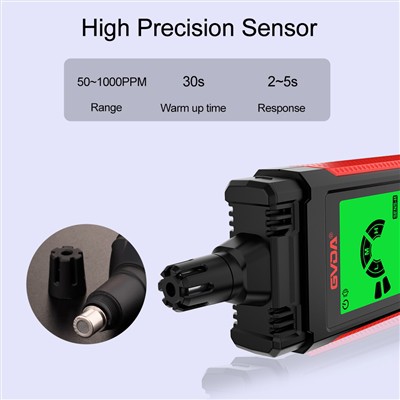
L-importanza ta ' gass ditekter!
L-importanza ta ' gass ditekter, li huwa użat biex jiskopri il- bidla ta' ħsara gass konċentrazzjoni fi il ix-xogħol sit. Fil il-proċess ta ' produzzjoni , fabbriki mhux biss ħtieġa pur industrijali gass bħala mhux ipproċessat materjali , iżda ukoll prodotti a varjetà ta ' għoli pur derivat gassijiet , li huma ħafna drabi ta' ħsara għal xi wħud punt. Għalhekk, it is necessary to have various gas detection instruments with high sensitivity, high accuracy and high selettività for monitoring, so as to prevent industrial gas raw materials from leaking or derived gases from exceeding the standard, and monitor them at all times to reduce hidden dangers.
Gas detection plays a very important role in the production of industrial enterprises, li is the key to prevent accidents and ensure the smooth production safety of enterprises, and is the guarantee for the safety for the safety of production personnel and surrounding people. Many accidents are often caused by inadequate supervision of gas, li can be avoided, but eventwalment isiru inċidenti, li huwa verament taqtigħ il-qalb. U aħna ukoll tama li il- maġġoranza ta ' produzzjoni intrapriżi jistgħu jieħdu dan bħala a twissija u ittejjeb is-superviżjoni ta' gass skoperta.
When detecting toxic gas, we need to use the toxic gas alarm. As we all know, the gas detector plays a vital role in the concentration detection of the whole gas alarm. The detector contains a gas sensor, li is is a a very important component. When detecting toxic gases, electrochemical sensors are used, and the service life is generally about one and a half to two years.
The electrochemical sensor works by reacting with the measured gas and generating an electrical signal proportional to the gas concentration. A typical electrochemical sensor consists of a sensing electrode (or working electrode) and a counter electrode separated by a thin electrolytic layer.
Normalment, kull wieħed sensor jikkorrispondi għal a specific detection gas, but any gas detector is not absolutely effective. Therefore, when choosing a gas sensor, we should be aware of the detection interference of other gases to ensure its hiss accuracy in detecting specific gases.
Each gas detector has its fixed gas concentration measurement range, and only when the measurement is completed within its measurement range can its accurate measurement be guaranteed. However, it is is easy to cause permanent damage to the sensor when it is measured beyond the measurement range for a long time.